
The Royal Flush - Design, Install & Repair
Licensed, Bonded & Insured | Family Owned & Operated Since 1965
Licensed #WI DNR, MI EGLE
WLWCA Members | MSHA Certified
we help greater Chehalis families & contractors through excellence in residential & commercial excavation, septic & demolition services.
You'll ❤️Saving 🕒 And 💰 Without Headaches!😊

AVOID COSTLY MISTAKES:
Do NOT hire an excavating contractor without first reading our free guide:
The ULTIMATE Excavation & Septic "Success Guide."

"We Help Familes & Businesses Through Excellence In Septic Services Throughout Wisconsin & Michigan!"
Dyer. Inc is your choice for septic design, septic tank installation, septic system repairs and septic pumping. We pride ourselves in the highest commitment to quality and customer satisfaction. We are the number one choice in your service area for septic services.
Our staff is licensed in Wisconsin as septic operators and certified as Michigan business operators too. Our staff maintains complete and current continuing education requirements.

Searching for Septic Services near me?

Your time and effort looking for the best septic contractor just paid off! We understand, you're probably searching for septic companies near me and "Whammo!" up pops hundreds of septic service contractors claiming to provide the best septic tank services. So who do you trust your septic tank needs with? We understand it can be a little daunting. We are happy to help in any way and sincerely thank you for taking time to consider us! Here's some of our most popular excavation services we can help you with right away:
✔️ Septic services of all kinds
✔️ Septic Inspections (County & Realty)
✔️ Septic pumping (Residential & Commercial since 1965)
✔️ Cleaning a Septic Tank
✔️ Septic System Design (Since 1989)
✔️ Septic System Installation
We Take Pride In Quality Septic Services Launched FAST!

When considering a local excavation contractor or excavation company what should you consider? Along with the highest quality site work you want your excavation services to be done quickly and without headaches.
You can also count on us for:
✔️ Snow Plowing- Commercial only, snow removal & salt/sand applications
✔️ Drain Field replacement/ Leach Field Replacement
✔️ Septic Holding Tanks Sales

wE PROMISE TO clean up after Ourselves!
How Do You Know Your Hiring The Right Septic Company?
COMPARE THE SERVICES OFFERED BY DIFFERENT SEPTIC COMPANIES
TAKE A LOOK AT PICTURES OF SEPTIC WORK DONE BY THE COMPANIES YOU’RE CONSIDERING
CHECK OUT REVIEWS, ASK FOR REFERENCES AND COMMENTS FROM PAST CLIENTS
CHECK THE EQUIPMENT OWNED BY THE SEPTIC COMPANIES
ARE THEY PROFESSIONAL AND COURTEOUS WHEN THEY ANSWER THE PHONE?
DO THEY PROMPTLY RETURN CALLS?
HOW WELL DO THEY PAY ATTENTION TO THE SMALLEST DETAIL?
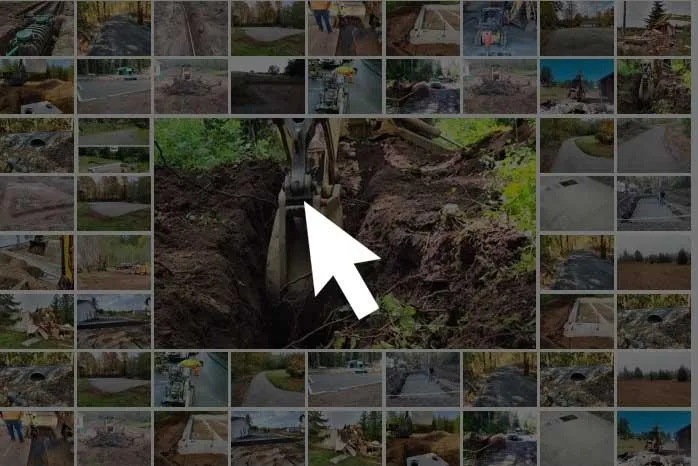
See Photos!
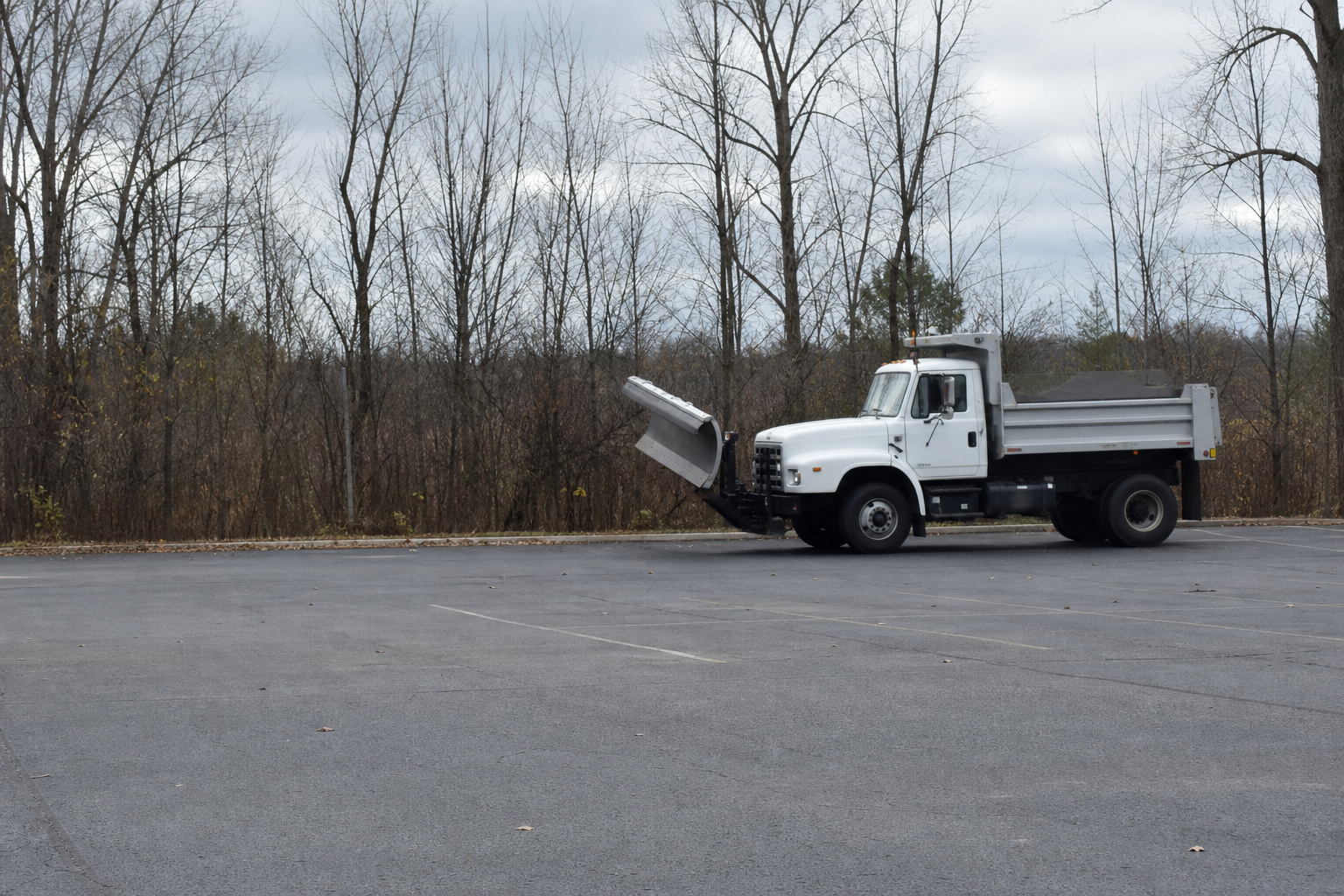
Booking Commercial Snow Plowing Before the First Snow Near Marinette County, WI
By the time the first plowable snow falls in Marinette County, the good commercial plow contractors are already full. That is not a sales line — it is simply how seasonal contracting works. A plow operator can only cover so many lots in the hours between the snow stopping and your employees arriving, so routes get built in the fall and then they close.
If you manage a clinic, a retail strip, a church, an apartment complex or an industrial yard in northern Wisconsin or the western U.P., October is the month to have the conversation. Here is what to sort out before the weather makes the decision for you.
Why route position matters more than price
Commercial snow removal is a routing business. Your contractor plows a sequence of properties, and where you sit in that sequence determines whether your lot is clear at 6:00 a.m. or 10:00 a.m. A property that gets added in January is added to the end of an existing route, because the customers already on it were promised a certain window.
When you sign matters as much as who you sign with. Ask directly: where would we fall in your route, and what time would our lot realistically be cleared after a four-inch overnight snow? A contractor who answers that specifically is one who has actually thought about capacity.
Decide what triggers a plow
Most disputes between property managers and plow contractors trace back to a trigger depth that was never agreed on in writing. Common triggers run in the two-inch range, but the right number depends on your property. A medical clinic with elderly patients arriving at 7:00 a.m. needs a lower trigger than a contractor's equipment yard.
Settle these points now, in writing:
- Trigger depth — the accumulation that sends a truck automatically, without a phone call
- Service window — how many hours after snowfall ends your lot is expected to be clear
- Continuous-storm policy — what happens during a two-day event that never stops long enough to be a single push
- Salt and sand — whether de-icing is automatic, on request, or billed separately
- Sidewalks and entryways — often quoted separately from the lot, and often the part that generates the slip-and-fall claim
Walk the lot before it disappears under snow
The single most useful hour you will spend is walking the property with your contractor in October, while everything is still visible. Things worth marking or discussing:
Where snow will be stacked. Every lot has a finite amount of storage space, and in a heavy winter the piles get large. Piles placed uphill of a building, over a drain, or on top of a septic drain field cause problems in March that nobody was thinking about in November. Piles also block sightlines at exits.
Obstacles that vanish. Curb ends, parking blocks, landscape edging, low bollards, well heads, septic tank lids and risers, fire hydrants, and shallow utility pedestals all disappear under a foot of snow. Marking them with stakes in the fall prevents a plow blade from finding them the hard way.
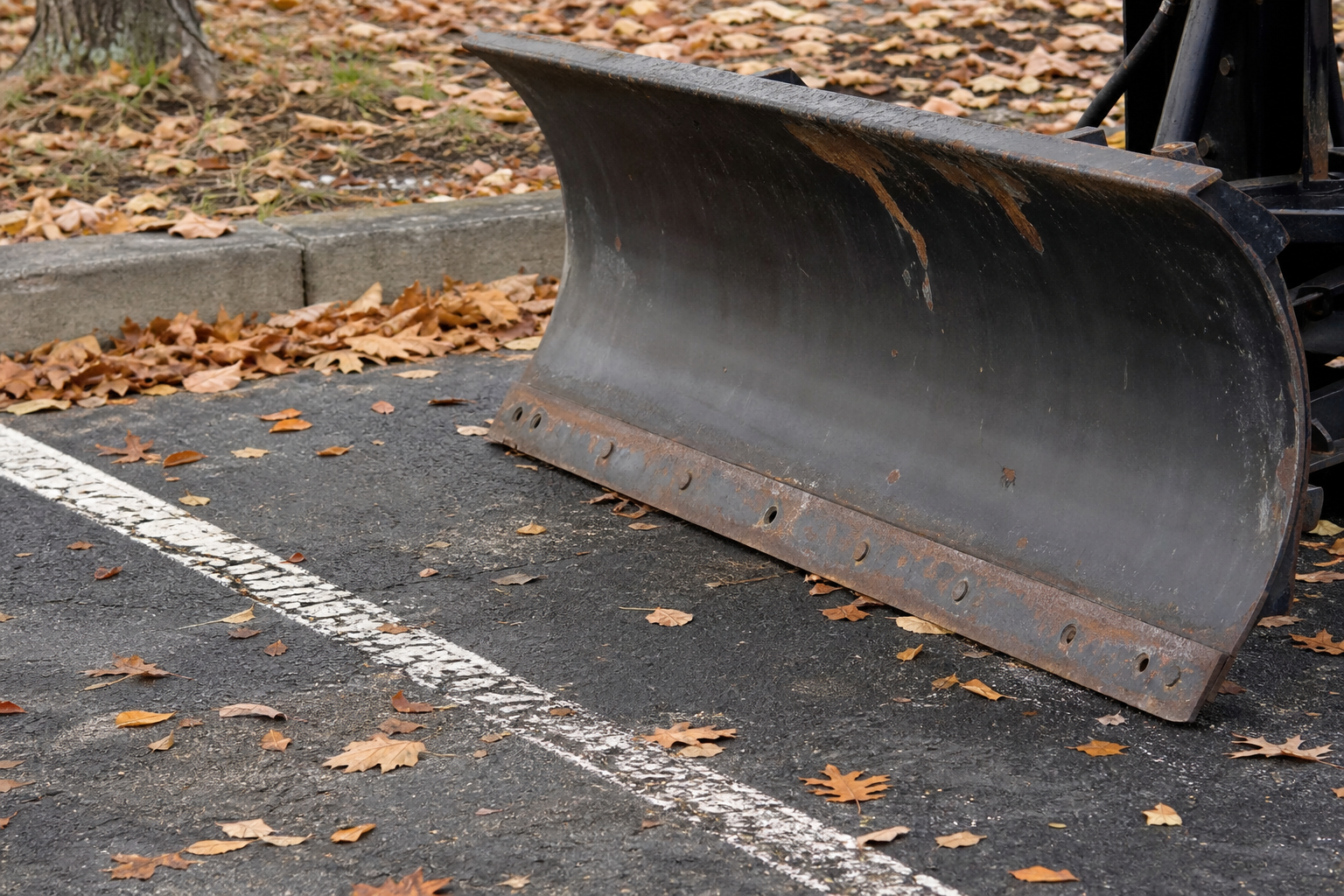
Drainage and refreeze. Note where meltwater runs. A lot that drains across a walkway will produce a sheet of ice at that spot every single thaw cycle. Sometimes the fix is a grading correction done in the fall; sometimes it just means that spot gets sand every visit.
Pavement condition. Potholes and broken asphalt edges catch plow blades. Better to know about them now than to argue about who broke what in February.
Understand how you are being billed
Commercial snow contracts generally take one of three shapes, and each one moves the risk somewhere different:
Per-push billing means you pay for each visit. In a light winter you spend very little; in a heavy one your costs climb with the snowfall. Your budget is unpredictable, but you never pay for service you did not get.
Seasonal contracts mean one fixed price for the whole winter regardless of how much it snows. Your budget is fixed and easy to plan around, and the contractor carries the risk of a brutal season.
Per-inch or tiered billing sits in between, with rates that step up as accumulation increases.
None of these is inherently better. What matters is that you know which one you have, and that the invoice you get in January matches what you thought you agreed to in October.
Check the boring paperwork
Ask for a current certificate of insurance and confirm it is still in force for the season you are buying. Snow work carries genuine liability — slip-and-fall claims are among the most common winter losses for commercial property owners, and your contractor's coverage matters to you.
It is also worth asking whether your contractor keeps service records. A dated log showing when the lot was plowed and when de-icer was applied is exactly the documentation you want if a claim is ever filed against your property.
Snow work and everything under it
One advantage of working with a contractor who also does site work is that the winter problems and the ground problems get solved by the same people. A low spot that ices over every February is a grading issue. A culvert that backs up during a thaw is a drainage issue. A drain field getting compacted by stacked snow and truck traffic is a septic issue.
Those are not snow problems, exactly — but they show up in winter, and they are worth flagging during the fall walkthrough so they can be scheduled as real fixes rather than endured for another season.
The short version
Snow contracting rewards the people who plan early. Get your trigger depth and service window in writing, agree on where the snow is going to be stacked, mark everything a blade could hit, confirm the insurance, and get on the route before the route is full.
Dyer, Inc. has served families and businesses across northern Wisconsin and the western Upper Peninsula since 1965, and handles commercial snow plowing along with sand and salt applications. If you would like your property on this season's route, request a quote here and we will get a walkthrough scheduled while the ground is still bare.

We Offer Septic Services Near You!
If you don't see your specific area contact us and we may still be able to help or give a referral.

The Royal Flush - Design, Install & Repair
Address:
1025 W Fischer Lake Pkwy, Niagara, WI 54151
Hours:
Mon - Fri. 8:00 am - 4:00 pm
Weekends & Holidays by appointment only*
*There will be a surcharge for after hours & holiday appointments


All rights reserved | Privacy policy | Client Support Area | For Cathy | Terms & Conditions | Privacy Policy