
The Royal Flush - Design, Install & Repair
Licensed, Bonded & Insured | Family Owned & Operated Since 1965
Licensed #WI DNR, MI EGLE
WLWCA Members | MSHA Certified
we help greater Chehalis families & contractors through excellence in residential & commercial excavation, septic & demolition services.
You'll ❤️Saving 🕒 And 💰 Without Headaches!😊

AVOID COSTLY MISTAKES:
Do NOT hire an excavating contractor without first reading our free guide:
The ULTIMATE Excavation & Septic "Success Guide."

"We Help Familes & Businesses Through Excellence In Septic Services Throughout Wisconsin & Michigan!"
Dyer. Inc is your choice for septic design, septic tank installation, septic system repairs and septic pumping. We pride ourselves in the highest commitment to quality and customer satisfaction. We are the number one choice in your service area for septic services.
Our staff is licensed in Wisconsin as septic operators and certified as Michigan business operators too. Our staff maintains complete and current continuing education requirements.
Searching for Septic Services near me?

Your time and effort looking for the best septic contractor just paid off! We understand, you're probably searching for septic companies near me and "Whammo!" up pops hundreds of septic service contractors claiming to provide the best septic tank services. So who do you trust your septic tank needs with? We understand it can be a little daunting. We are happy to help in any way and sincerely thank you for taking time to consider us! Here's some of our most popular excavation services we can help you with right away:
✔️ Septic services of all kinds
✔️ Septic Inspections (County & Realty)
✔️ Septic pumping (Residential & Commercial since 1965)
✔️ Cleaning a Septic Tank
✔️ Septic System Design (Since 1989)
✔️ Septic System Installation
We Take Pride In Quality Septic Services Launched FAST!

When considering a local excavation contractor or excavation company what should you consider? Along with the highest quality site work you want your excavation services to be done quickly and without headaches.
You can also count on us for:
✔️ Snow Plowing- Commercial only, snow removal & salt/sand applications
✔️ Drain Field replacement/ Leach Field Replacement
✔️ Septic Holding Tanks Sales

wE PROMISE TO clean up after Ourselves!
How Do You Know Your Hiring The Right Septic Company?
COMPARE THE SERVICES OFFERED BY DIFFERENT SEPTIC COMPANIES
TAKE A LOOK AT PICTURES OF SEPTIC WORK DONE BY THE COMPANIES YOU’RE CONSIDERING
CHECK OUT REVIEWS, ASK FOR REFERENCES AND COMMENTS FROM PAST CLIENTS
CHECK THE EQUIPMENT OWNED BY THE SEPTIC COMPANIES
ARE THEY PROFESSIONAL AND COURTEOUS WHEN THEY ANSWER THE PHONE?
DO THEY PROMPTLY RETURN CALLS?
HOW WELL DO THEY PAY ATTENTION TO THE SMALLEST DETAIL?
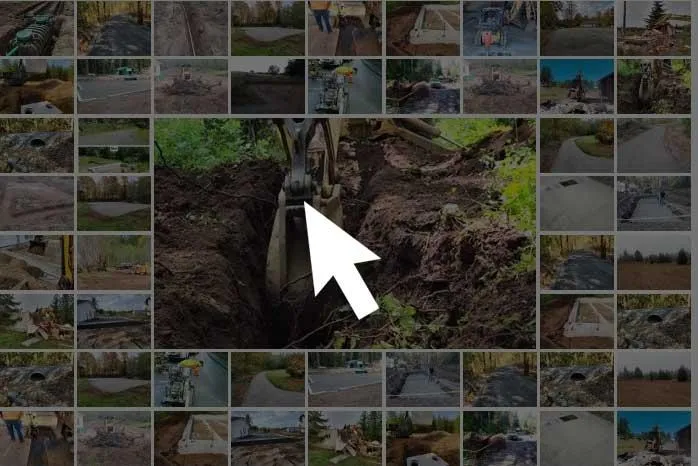
See Photos!
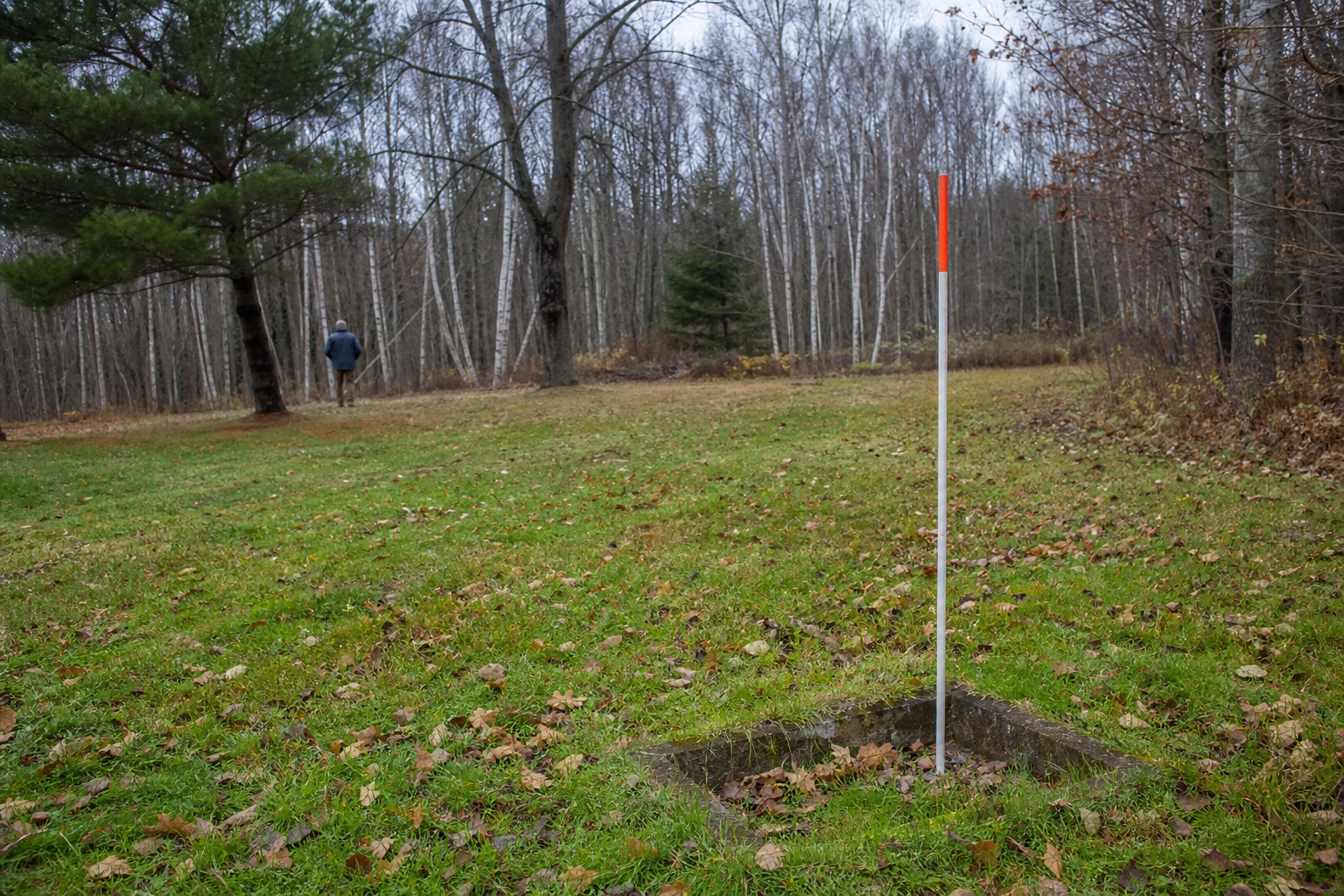
Find and Mark Your Septic Tank Lid Before the Snow Comes Near Iron County
Here is a situation that plays out every winter across Iron County and the surrounding area. A septic alarm goes off in January, or a drain starts backing up, and the homeowner calls for emergency service. The truck arrives, and then everyone stands in the yard looking at two feet of snow over frozen ground, trying to work out where the tank lid is.
What would have been a straightforward pump-out becomes an hour of probing and digging before any actual work starts. Occasionally it becomes a search that has to be abandoned until a thaw.
All of that is avoidable, and October is when you avoid it.
Why winter turns a small job into a big one
Three things change once the ground freezes and the snow piles up in the Northwoods:
Landmarks disappear. The slight depression in the lawn, the greener strip of grass, the survey stake you meant to replace — all invisible under snow. Even homeowners who know roughly where the tank sits often cannot find it within the several feet of accuracy that actually matters.
Frozen ground fights back. Digging down to a lid buried under a foot of soil is easy in October and genuinely difficult in January, when the top of the soil column is frozen solid.
Access routes close. A pump truck needs to get within hose reach of the tank. The route across the lawn that works in summer may be impassable when it is drifted over, and driving heavy equipment across a frozen, snow-covered drain field is its own problem.
Find it now, while it is easy
If you do not already know exactly where your tank and lid are, this is a good weekend project.
Start with the paperwork. In Wisconsin, county records for private onsite wastewater treatment systems typically include the as-built drawing filed when the system was installed, showing tank location with measurements from fixed points on the house. Your county zoning or land information office is the place to ask. Michigan property owners can ask the county health department for the same kind of record.
Follow the pipe. The sewer line leaves the house on one side, usually through the basement wall, and runs to the tank in a fairly straight line. Find where it exits inside, then work out where that line goes outside.
Look for the evidence. Grass over a tank often grows differently — sometimes greener, sometimes browner in a dry spell, and there is frequently a subtle rectangular depression as backfill settles over the years.
Probe carefully. A thin metal probe pushed into the soil in a grid pattern will hit the concrete lid. Go gently; you do not want to punch through a pipe or an old lid.
Mark it so a stranger could find it
Once you have located the lid, make it findable by someone who has never been to your property, in the dark, in a snowstorm.
- Drive a tall stake — a fiberglass driveway marker works well — directly at the lid, tall enough to stay above the deepest snow you get
- Measure from two fixed points, such as a house corner and a deck post, write the two distances down, and tape the note inside a kitchen cabinet or the electrical panel door
- Photograph the location in the fall with the house visible in the frame, and keep the photo on your phone
- Consider a riser if you are tired of digging every few years
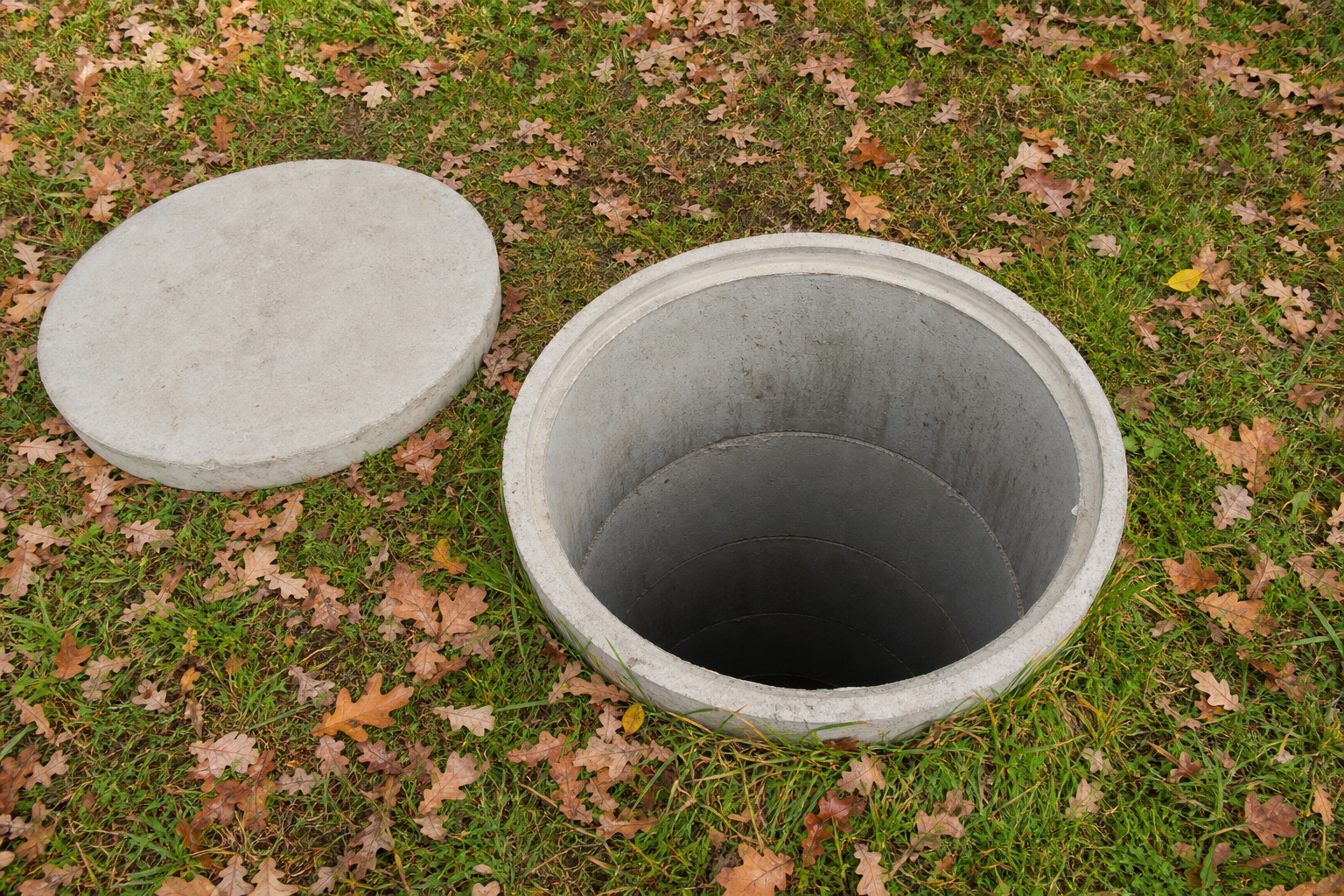
Risers: worth it in snow country
A riser is a short vertical section that extends the tank access up to ground level with a secure lid at the surface. In a climate where the ground is frozen and snow-covered for months, the case for one is strong. Instead of finding and excavating a buried lid in February, your service technician clears snow off a visible cover and opens it.
Risers make routine maintenance easier too. When access is trivial, tanks tend to actually get pumped and inspected on schedule instead of being put off another year. Lids must be secured — a septic access opening is a genuine safety hazard, and the cover needs to be fastened so it cannot be removed by a child.
While you are out there: the fall checks
Since you are already at the tank, a few other things are worth a look before winter:
Get on a real maintenance schedule. Wisconsin's administrative code sets inspection and maintenance requirements for onsite systems — among them, systems predating July 2000 that use in-situ soil for treatment or dispersal must be visually inspected at least once every three years. Most households land in a three-year rhythm for pumping as well, though heavy use or a garbage disposal shortens it. If you cannot remember your last pump-out, you are due.
Clean or check the effluent filter if your system has one. A clogged filter is a common cause of slow drains and is a far better problem to find in October than in a January cold snap.
Keep the drain field clear. Do not stack plowed snow on it, do not drive on it, and do not let anyone park there. Compacted, saturated soil over a drain field damages the very thing that makes the system work.
Insulate lightly if the system is little-used. Snow cover is itself good insulation. Systems at risk of freezing are typically ones with low flow — vacation properties, seasonal cabins, homes where someone travels for weeks. A layer of straw or mulch over the tank and lines helps in those cases.
The small job that prevents the big one
Locating and marking your tank lid takes an afternoon in October. Not doing it costs you time, money and considerable frustration on the worst possible day in January.
Dyer, Inc. has provided septic design, installation, inspection and pumping across Wisconsin and Michigan since 1965. If you would like your tank located and marked, a riser installed, or a pump-out scheduled before the ground freezes, request a quote here.

We Offer Septic Services Near You!
If you don't see your specific area contact us and we may still be able to help or give a referral.

The Royal Flush - Design, Install & Repair
Address:
1025 W Fischer Lake Pkwy, Niagara, WI 54151
Hours:
Mon - Fri. 8:00 am - 4:00 pm
Weekends & Holidays by appointment only*
*There will be a surcharge for after hours & holiday appointments


All rights reserved | Privacy policy | Client Support Area | For Cathy | Terms & Conditions | Privacy Policy